
Indian Agriculture and Climate Change: An Economic Deep Dive
Indian agriculture and climate change | A Comprehensive Account
India has been suffering from significant impacts of climate change, from high temperatures to flooding rains.
Each year, we hear of more records being broken from an ever increasing number of cities experiencing temperatures above 45°C, excess deaths directly caused by this, and the subsequent actions taken amid the climate crisis — from water rationing to banning public gatherings.
In addition to its direct impacts on people, climate change is causing significant disruptions to food production, and these effects are felt well beyond India.
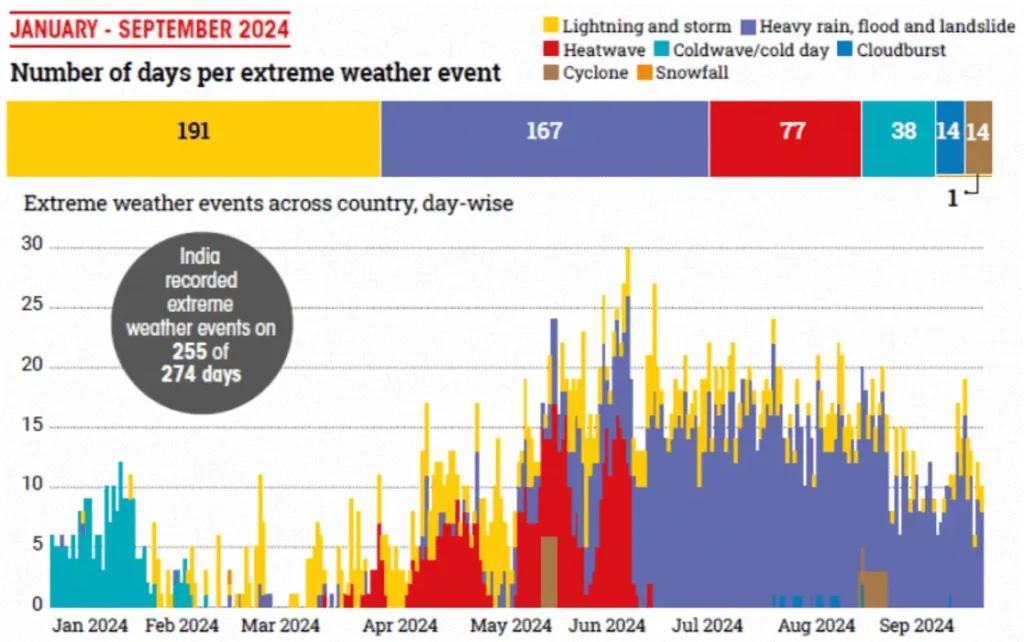
According to the Centre for Science and Environment, extreme weather events have occurred on about 90% of days from January to September in the last few years, as shown in Figure 1.
In 2024, 3.2 million hectares of land with crops were affected by these events and nearly 10,000 livestock were killed.
Understanding the Agricultural Impact in India
Impacts on agriculture have been occurring for many years. The banking regulator, Reserve Bank of India (RBI), has stated that “India has witnessed changes in climatic patterns in line with the rest of the world… the rainfall pattern, particularly with respect to the [south west monsoon] SWM, which provides around 75% of the annual rainfall, has undergone significant changes.
Moreover, the occurrence of extreme weather events like floods/unseasonal rainfall, heat waves and cyclones has increased during the past two decades, and data reveal that some of the key agricultural states in India have been the most affected by such events.”
As well as affecting food production, the extreme weather in agricultural states impacts employment and the economy, with agriculture the primary source of livelihood for approximately 58% of the population, and agriculture and allied sectors contributing about 18% of gross value added (GVA).
Several challenges confront Indian agriculture, including reduced availability of land and water, deteriorating soil health in many regions, yield stagnation, pests and diseases, and unprecedented climate change. These need to be tackled for the long-term sustainability and viability of agriculture in the country.
Of the 787 districts in India, 109 have very high climate risk and 201 have high climate change risk, as per Figure 2.
Major causes of the risk are low access to irrigation, high numbers of droughts, cyclones or floods, an increase in the minimum temperature, small farm size, and high-value assets located where hazards occur.
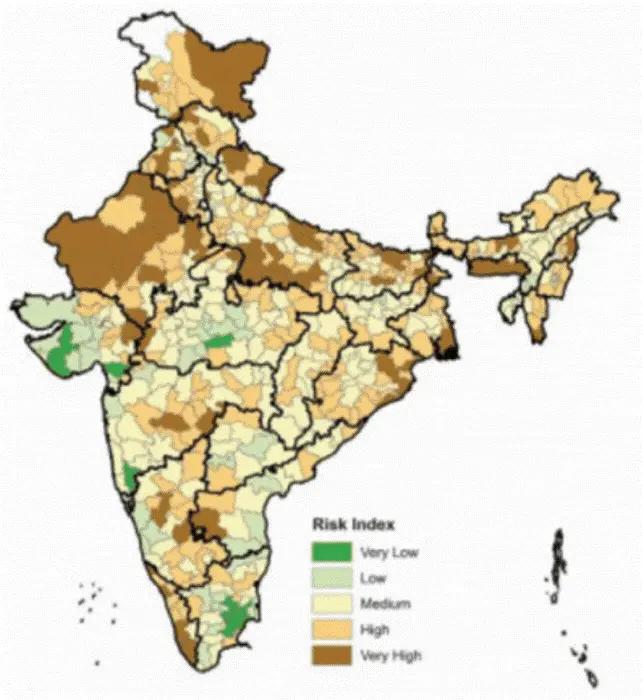
Source: India Third National Communication and Initial Adaptation Communication
The Economic Lens: Costs, Trade-offs, and Systemic Risk
Climate change poses profound economic threats to India’s agriculture-dependent economy:
-
Macroeconomic Vulnerability: Agriculture contributes ~18% of India’s GVA and employs 58% of the population. Yield declines (e.g., -20% projected for rice/wheat) directly threaten GDP growth, rural incomes, and food price stability. Export bans (rice, sugar, onions) destabilize global markets, harming trade relationships and importing nations’ food security.
-
Inflation & Fiscal Pressure: Crop losses from extreme weather drive domestic food inflation, straining household budgets. The government faces rising subsidy costs (e.g., fertilizer, power, irrigation) and disaster relief spending, diverting funds from long-term development.
-
Financial System Risk: Rural banks and insurers face heightened credit risk as farm incomes fluctuate. The RBI warns climate stress in key agricultural states threatens loan portfolios and regional economic stability.
-
Trade-Offs in Adaptation: Shifting to resilient crops (e.g., millets) or efficient irrigation requires significant investment. While solar pumps reduce emissions and long-term costs, upfront financing remains a barrier for smallholders. Export restrictions protect domestic consumers but sacrifice foreign exchange earnings and market share.
-
Systemic Opportunity: Climate-resilient practices (direct seeding, diversified crops) can boost farm profitability and reduce emissions. Scaling these innovations offers pathways to sustainable growth, export stability, and reduced fiscal burdens.
New Agricultural Strategies Amid Climate Change
In response to these reductions in food availability and surging prices, several strategies have been implemented to adapt Indian agricultural practices to the changing climate conditions, such as:
-
Crop diversification, away from rice towards other crops, which not only relieves pressure on water supplies but also helps improve soil quality and the incidence of pests and disease
-
Crops being bred to be more tolerant to heat, drought, flood and salinity
-
Changing the sowing time for cereal and millet crops, and increasing their heat tolerance, plus improving water and nutrient management
-
Using chickpeas and mustard plants that required shorter growing periods — and can therefore be harvested sooner
-
Changing the planting time of potatoes
In addition to changing how individual crops are grown, more wide-ranging changes to agricultural production are also occurring, for example:
-
Using efficient irrigation systems to deliver water directly to plant roots, which not only improves on-farm water management but also reduces the amount of water needed
-
New types of crop management, for example sowing seeds to avoid water stress in monsoon crops, zero-till sowing to avoid inter-plant competition, and mulching rather than burning of crop residues to conserve soil moisture and soil organic carbon
-
Altering how rice crops are grown by seeding rice directly in fields (rather than growing rice in nurseries and then planting it in the field) and using drought-tolerant varieties
These changes should not only allow farmers to adapt to the changing climate, but also improve their income, and in many cases reduce the greenhouse gas emissions from agriculture. For example, seeding rice on location reduces greenhouse gas emissions by about 40%.
The Bottom Line
Climate change severely threatens India's agriculture through extreme heat, floods, and erratic monsoons, reducing crop yields (rice, wheat, maize) and nutritional value, impacting food security and livelihoods. This forces export bans (e.g., rice), disrupting global markets.
To build resilience, India is adopting critical adaptations: diversifying crops away from water-intensive rice, breeding heat/drought-tolerant varieties, altering planting times, and implementing efficient irrigation (like solar pumps).
These strategies not only aim to secure domestic food production and farmer incomes but also contribute to reducing the sector's significant greenhouse gas emissions.
Continued innovation and emission reduction are vital for India's long-term agricultural sustainability and global food supply stability.
EduSure has developed the best and most structured programme to help students crack the Masters in Economics Entrance Exams. With a legacy spanning 14 years, EduSure boasts consistent top rankings in prestigious institutions like DSE, JNU, IGIDR, and IIT.
Student Testimonials and Success Stories:
Discover the success stories of EduSure students by visiting our YouTube channel: YouTube. Hear firsthand experiences from students who have achieved their dreams with our guidance.
Speak to an EduSure Student Counsellor:
For personalised advice and to speak to an EduSure student counsellor, call us at 8100824600/01. Our counsellors are here to help you every step of the way.
Faculty Spotlight
Samkith Banthia: ISI Alumnus, Eco(H) St. Xavier's Kolkata, FRM from GARP, Formerly with Barclays Bank.
Samkith Sir transitioned from a successful banking career to teaching and mentoring aspiring students. With his expertise in mathematics and a nurturing demeanour, he is dedicated to guiding students toward academic excellence.
Mahima Banthia: DSE Alumnus, Eco(H) SRCC Delhi, Former Lecturer at St. Stephen’s College Delhi, UGC NET qualified.
In Mahima Ma’am’s class, we prioritise logical reasoning and emphasise conceptual understanding, ensuring mastery of macroeconomics. Mahima Ma’am also handles administrative responsibilities at EduSure, ensuring the highest quality service to every student.
Join the EduSure Program:
To enrol in our courses, drop in your details at EduSure Form, and we'll get back to you as soon as we can.
Email us: