
Monetary Policy in India: Definition, Types, Objectives, Instruments, and Effects
Monetary Policy in India: Definition, Types, Objectives, Instruments, and Effects
Why do loan EMIs increase or decrease? Why does inflation all of a sudden increase? How do governments control growth in times of crisis like COVID-19? In many cases, this is because of monetary policy. One of the strongest instruments in regulating money supply, inflation, and the development of the economy, monetary policy is controlled by the central bank (Reserve Bank of India in India, the Federal Reserve in the US).
What is Monetary Policy in India?
Monetary Policy in India is the procedure through which the central bank controls the amount of money and credit in the economy to attain certain goals such as price stability, growth in the economy, and creation of employment. The RBI Monetary Policy Committee (MPC) in India reviews the policy every two months to maintain inflation within the target of 4% ± 2% and help in supporting growth.
Learn Economics the Smarter Way
Monetary Policy Objectives
The primary objectives of Monetary Policy in India are:
-
Price Stability – regulating inflation and defending purchasing power.
-
Economic Growth – ensuring sufficient money is available to invest and consume.
-
Employment Generation – fostering industries and services to generate jobs.
-
Exchange Rate Stability – maintaining stability in foreign exchange markets.
-
Financial Stability – ensuring confidence in the banking and financial system.
Types of Monetary Policy in India
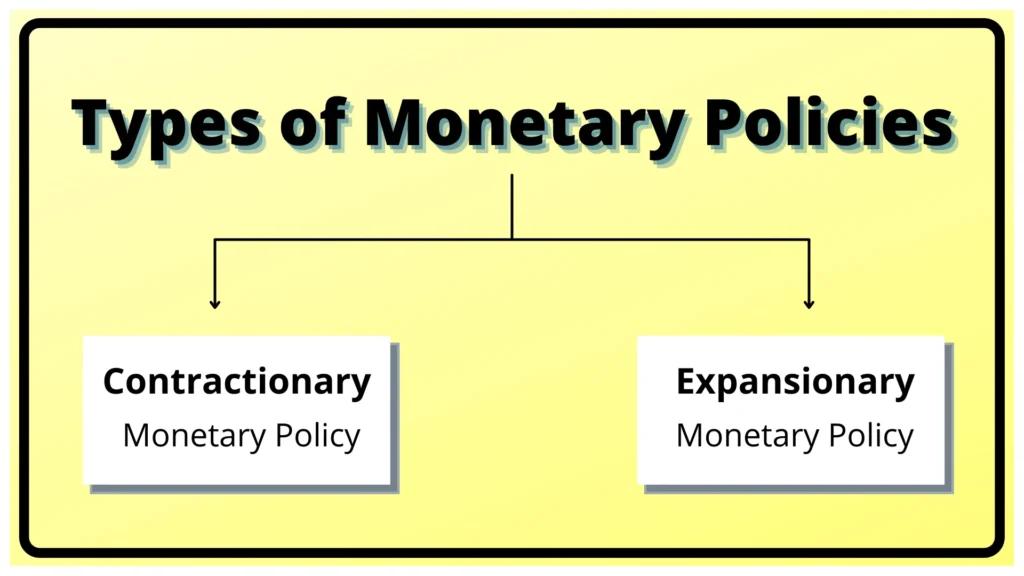
1. Expansionary Monetary Policy in India
Expansionary Monetary Policy in India is adopted when the economy is facing a slowdown, recession, or weak demand. The aim is to increase the money supply in the economy, making credit cheaper and more accessible for businesses and individuals. This boosts investment, consumption, and overall economic activity.
-
How it works: The RBI may reduce the repo rate, cut the cash reserve ratio (CRR), or lower the statutory liquidity ratio (SLR). These measures encourage commercial banks to lend more at lower interest rates.
-
Impact: Higher borrowing and spending can revive demand, stimulate production, and create employment opportunities.
-
Example: RBI reducing the repo rate during periods of low GDP growth or recessionary pressures.
2. Contractionary Monetary Policy in India
Contractionary Monetary Policy in India is used when inflation is rising and threatens price stability. The goal is to reduce the money supply and restrict excessive demand in the economy.
-
How it works: The RBI may increase the repo rate, raise the CRR, or use tools like open market operations (OMO) to absorb liquidity from the system.
-
Impact: Borrowing becomes costlier, leading to reduced spending and investment. This helps control inflation and stabilizes the currency value.
-
Example: RBI raising the repo rate to curb high inflation levels in food and fuel prices.
Tools of Monetary Policy in India
The tools of Monetary Policy in India are broadly categorized into quantitative (general) and qualitative (selective) instruments. These tools allow the Reserve Bank of India (RBI) to regulate money supply, credit flow, and liquidity in the economy.
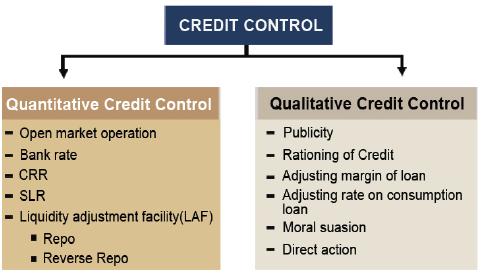
Quantitative Tools of Monetary Policy in India
- Repo Rate
The repo rate is the interest at which the RBI lends short-term money to commercial banks.
-
A reduction in repo rate lowers the borrowing cost for banks, leading to reduced loan interest rates for consumers and businesses. This stimulates demand and investment.
-
An increase in repo rate raises loan costs, which helps in controlling inflation.
- Reverse Repo Rate
The reverse repo rate is the rate at which RBI borrows from commercial banks.
-
Increasing the reverse repo rate encourages banks to park excess funds with RBI for a safe return, thereby reducing liquidity in the market.
-
This measure can stabilize the economy by controlling excess money circulation.
- CRR (Cash Reserve Ratio)
CRR is the proportion of a commercial bank’s total deposits that must be held as reserves with the RBI.
-
An increase in CRR reduces the lending capacity of banks, leading to lower liquidity.
-
A decrease in CRR allows banks to lend more, thereby enhancing credit flow.
- SLR (Statutory Liquidity Ratio)
SLR is the minimum percentage of a commercial bank’s net demand and time liabilities (NDTL) that must be invested in liquid assets such as cash, gold, or approved government securities.
- By adjusting the SLR, the RBI regulates how much money banks can release for loans and advances.
- Open Market Operations (OMOs)
OMOs involve the buying and selling of government securities by the RBI.
-
When the RBI purchases securities, it injects money into the banking system, promoting lending.
-
When it sells securities, liquidity is absorbed, which helps control inflation.
Qualitative Tools of Monetary Policy in India
Unlike quantitative tools, qualitative tools selectively influence the distribution of credit to ensure priority sectors are funded while speculative lending is restricted.
Credit Rationing
The RBI may restrict credit to certain non-essential or speculative sectors (e.g., luxury goods, real estate) while prioritizing credit for agriculture, MSMEs, or essential industries. This ensures credit is utilized for productive purposes.
Moral Suasion
This is a persuasive technique where the RBI advises or urges banks to follow certain guidelines in the interest of the economy. For example, during inflation, RBI may request banks to reduce lending to non-essential sectors even without strict enforcement.
Margin Requirements
Margin requirement refers to the proportion of collateral borrowers must provide against loans.
Higher margin requirements make borrowing harder, curbing speculative lending.
Lower margin requirements ease borrowing, thereby increasing credit flow.
At Edusure, our expert faculty breaks down complex economic policies into easy-to-grasp concepts, helping students connect theory with real-world applications. Join our structured course to master topics like Monetary and Fiscal Policy for your MSc Economics preparation.
Mechanism of Transmission of Monetary Policy in India
The transmission mechanism explains how changes in policy rates affect the broader economy.
-
For example, when the RBI lowers the repo rate, banks borrow at cheaper rates and reduce their lending rates. Consumers then borrow more, leading to higher demand, investment, and growth.
-
However, in India, the transmission of monetary policy is often sluggish due to issues such as non-performing assets (NPAs), low deposit interest rates, and inefficiencies in the banking system.
Monetary Policy vs Fiscal Policy in India
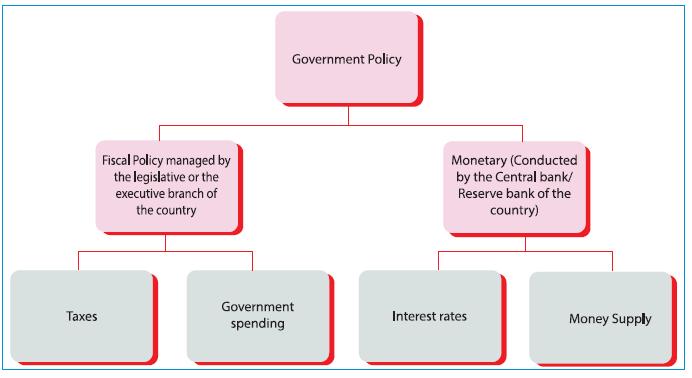
| Basis | Monetary Policy in India (RBI) | Fiscal Policy (Government) |
|---|---|---|
| Authority | RBI / Central Bank | Government |
| Focus | Money Supply & Credit | Taxation & Expenditure |
| Tools | Repo, CRR, SLR, OMOs | Taxes, Subsidies, Borrowing |
| Time Lag | Short (quicker) | Long (slower to implement) |
Confused about how these concepts appear in entrance exams? Book a free counselling session with Edusure to understand how Monetary Policy and Fiscal Policy are tested in MA/MSc Economics exams
Book a free counselling session with Edusure
Merits of Monetary Policy in India
-
Helps control inflation effectively.
-
Rapid implementation compared to fiscal policy.
-
Stabilizes the currency and supports investments.
Limitations of Monetary Policy in India
-
Less effective against supply-side inflation (such as fuel price shocks).
-
Implementation delays in the banking system.
-
Cannot directly create employment opportunities.
Monetary Policy in India during the Crisis Period
How does the RBI intervene during crises? In any economic downturn, Monetary Policy in India is often the first line of defense. The Reserve Bank of India (RBI) has been accommodative to promote liquidity and financial stability, particularly during the COVID-19 pandemic.
Key measures included:
-
Reducing repo rates to make borrowing cheaper.
-
Declaring loan moratoriums to provide relief to households and businesses.
-
Injecting liquidity into the system through Long-term Repo Operations (LTROs).
These steps supported job retention, sustained demand, and prevented a collapse of credit flow.
Globally, central banks implemented similar measures. For example:
-
The U.S. Federal Reserve’s Quantitative Easing (QE) programs massively increased liquidity by purchasing government and corporate bonds.
-
The European Central Bank introduced asset purchase programs to counter deflation risks.
Such actions highlight how Monetary Policy in India and worldwide acts as an emergency shield—ensuring short-term survival, even though it may affect the pace of long-term recovery.
Conclusion
The economy of modern nations relies heavily on Monetary Policy in India. Its impact is evident in daily life, whether through inflation rates, EMIs, employment, or economic growth. For students of economics, understanding Monetary Policy in India is vital—not just theoretically, but also in analyzing real-life problems and policy decisions.
If you’re serious about cracking the MSc Economics entrance exams, the right guidance can make all the difference. At Edusure, we simplify complex topics like Monetary and Fiscal Policy, ensuring you not only understand them but also apply them in exams with confidence
Enroll Now – Limited Seats Available
EduSure has developed the best and most structured programme to help students crack the Masters in Economics Entrance Exams. With a legacy spanning 15 years, EduSure boasts consistent top rankings in prestigious institutions like DSE, JNU, IGIDR, and IIT.
Student Testimonials and Success Stories:
Discover the success stories of EduSure students by visiting our YouTube channel:YouTube. Hear firsthand experiences from students who have achieved their dreams with our guidance.
Speak to an EduSure Student Counsellor:
For personalised advice and to speak to an EduSure student counsellor, call us at 8100824600/01. Our counsellors are here to help you every step of the way.
Faculty Spotlight
Samkith Banthia: ISI Alumnus, Eco(H) St. Xavier's Kolkata, FRM from GARP, Formerly with Barclays Bank.
Samkith Sir transitioned from a successful banking career to teaching and mentoring aspiring students. With his expertise in mathematics and a nurturing demeanour, he is dedicated to guiding students toward academic excellence.
Mahima Banthia: DSE Alumnus, Eco(H) SRCC Delhi, Former Lecturer at St. Stephen’s College Delhi, UGC NET qualified.
In Mahima Ma’am’s class, we prioritise logical reasoning and emphasise conceptual understanding, ensuring mastery of macroeconomics. Mahima Ma’am also handles administrative responsibilities at EduSure, ensuring the highest quality service to every student.
Join the EduSure Program:
To enrol in our courses, drop in your details here, and we'll get back to you as soon as we can.
Email us: