
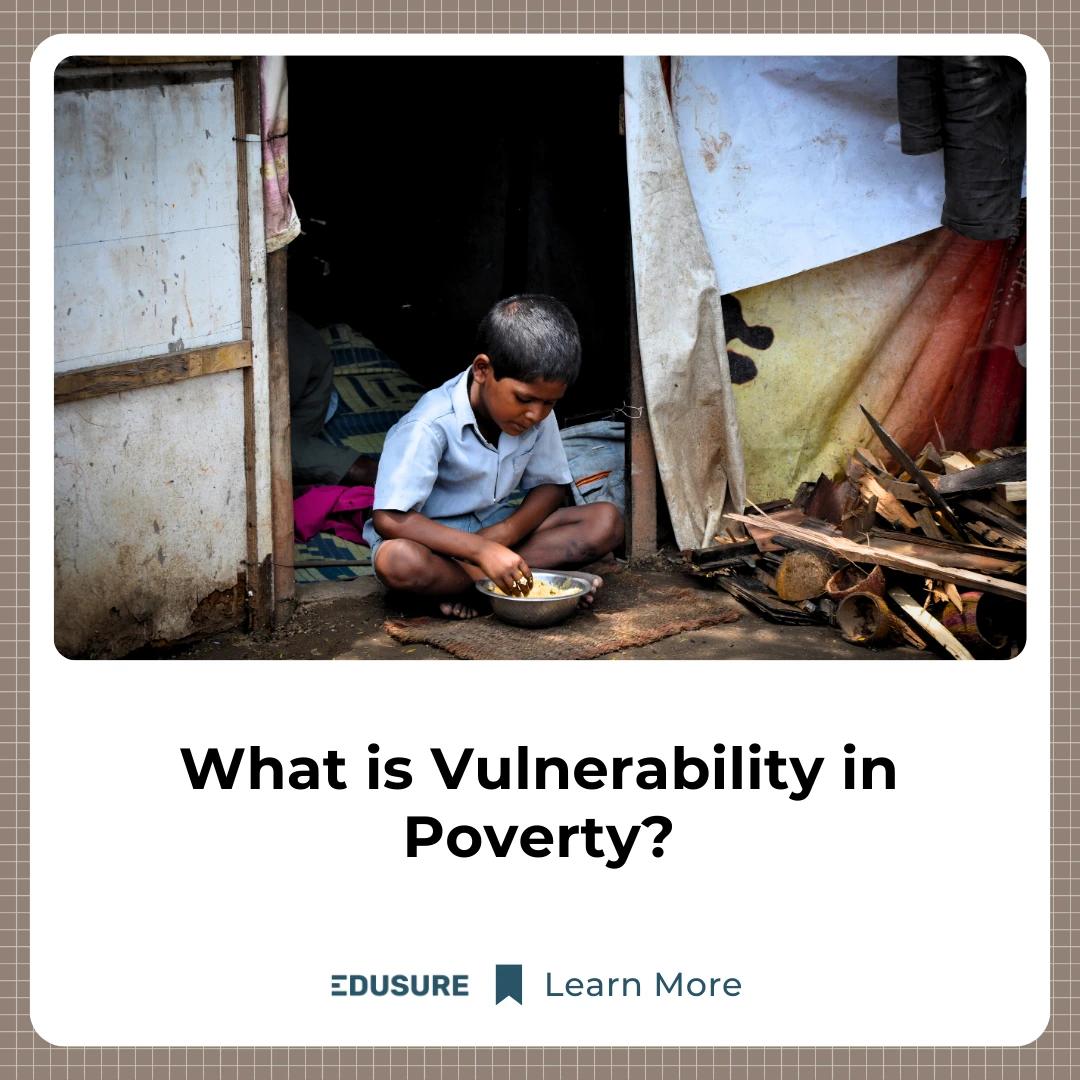
What Is Vulnerability in Poverty? The Hidden Trap Explained
What is Vulnerability in Poverty?
Poverty means not having enough money today.
But vulnerability in poverty is the constant risk of falling deeper tomorrow. Picture this: you're barely covering rent and food. Then your kid gets sick. Or your bike breaks, so you miss work. Suddenly, you're crushed by bills you can't pay.
No savings. No backup. That terrifying domino effect? That's vulnerability.
It's not just being poor now; it's being one bad break away from disaster, with no way to stop the fall.
Understanding this risk – why it happens and how to fight it – is crucial. Let's break it down.
What Exactly Is Vulnerability in Poverty?
Let's cut through the noise. Vulnerability in poverty isn't about how little money someone has right now. It's about how exposed they are to falling much deeper into hardship tomorrow.
Think of it like this:
-
Poverty is struggling to afford food, rent, or basics today.
-
Vulnerability in poverty is the constant risk that a single unexpected problem – a health emergency, a job loss, a broken tool – will trigger a downward spiral you can't stop.
Why? Because you lack the essential buffers:
-
No Savings: A $100 setback becomes a crisis.
-
No Safety Net: No family help, weak community support, or government aid to catch you.
-
Fragile Livelihood: Income sources that vanish with a bad harvest, a market crash, or a missed day of work.
In short: Vulnerability in poverty is the dangerous lack of resilience. It means living without armor against life's inevitable shocks. Poverty is the hole you're in. Vulnerability is how easily the walls can collapse and bury you deeper.
The Roots of Vulnerability
Vulnerability in poverty doesn’t come from nowhere. It grows from three deep, interconnected roots:
First, the absence of a financial buffer. When every penny goes to survival, saving is impossible. A single unexpected cost—a $100 medical bill, a broken phone needed for gig work—forces impossible choices: skip meals, pull a child from school, or borrow from loan sharks at crushing rates. No savings means no margin for error.
Second, constant exposure to unmanageable risks. This isn’t about everyday worries. It’s about living with landmines: jobs with zero security (a day’s illness = a day’s pay lost), harvests ruined by one dry week, neighborhoods where floods or violence erupt without warning. When your income or safety hangs by a thread, stability is a myth.
Third, the collapse of support systems. Family networks stretched too thin. Governments without safety nets. Clinics too far or too costly. Banks that see the poor as "too risky." When crisis hits and no one—and no system—catches you, freefall begins.
This is the trap: No buffer + constant risk + no backup = a life where one shock can unravel years of struggle. Vulnerability isn’t an accident. It’s what happens when people are left barefoot on broken glass.
How Vulnerability Traps People
Vulnerability in poverty isn’t just painful; it’s a self-reinforcing prison. Here’s how it locks people in:
It starts with a shock you can’t absorb. A medical emergency. A failed crop. A layoff. With no savings, you borrow – often at predatory rates. Now, you’re not just poor; you’re in debt. Your next earnings don’t go toward building a better life. They go to paying interest. You work harder but fall deeper.
Fear then narrows your horizon. When the next crisis could hit any day, you avoid risks – even smart ones. You skip job training that costs fees or takes time. You won’t lease better land or try a new crop. You cling to exploitative, low-paying work because it’s known. Survival mode kills opportunity.
Assets vanish. To pay that urgent debt or medical bill, you sell the very things that could lift you: a sewing machine, a bicycle, livestock, or land. Each sale makes you poorer and more exposed. The tools of escape become casualties of crisis.
Finally, hope dims. Constant battering teaches a cruel lesson: planning is pointless. Why save if the next flood sweeps it away? Why invest if your market stall burns down? You focus only on today because tomorrow feels like a threat.
This is the trap:
Shock → Debt → Fear → No Risk → No Assets → Less Resilience → Bigger Shock. It’s not a character flaw. It’s arithmetic. Vulnerability shrinks your world until all exits are sealed.
How to Break Vulnerability in Poverty Cycle?
The vulnerability in poverty trap feels inescapable, but it’s not. We break it by building armor where there was only exposure. Here’s how, step by concrete step:
First, shield people from the first domino falling. This means guaranteed cash or food support hitting immediately when crisis strikes – a job loss, a flood, an illness. No bureaucracy, no delays. This stops the panic sell-off of assets or the dive into predatory loans.
Impact: That hospital bill gets paid without selling the rickshaw. The family eats without borrowing from the loan shark. The first domino doesn’t tip.
Second, defuse the biggest bombs. Universal, affordable healthcare and insurance are non-negotiable. Health shocks are the deepest poverty pits. Insurance spreads the cost; clinics within reach prevent small problems from becoming catastrophes.
Impact: A sick child gets treated now. The cost doesn’t bury the family for years. The biggest bomb is disarmed.
Third, turn shaky ground into solid footing. Create stable, predictable income. This means fair wages you can count on, sick pay so a fever doesn't mean hunger, unemployment benefits for the gap between jobs, and support for farmers facing bad weather. Predictability kills the constant fear.
Impact: You can plan past next week. You can say "yes" to training. That missed shift doesn’t mean eviction. The ground firms up.
Fourth, build the cushion, brick by brick. Enable safe, accessible savings and help people acquire crucial assets – a better plow, a reliable sewing machine, a small piece of land. This turns vulnerability into resilience. A $100 problem gets solved with savings, not despair.
Impact: The bike breaks? Fix it with saved cash, keep earning. The cushion absorbs the blow.
This isn't charity. It's smart defense. The key is integration: Cash aid is useless if clinics don't exist. Health insurance fails if jobs vanish completely. Savings mean little if inflation eats them.
All four pieces – Safety Nets, Health Security, Income Stability, and Asset Building – must lock together. Build this armor, and vulnerability loses its grip. People stop just surviving shocks and start building beyond them.
The Bottom Line
Vulnerability in poverty isn't just being poor today – it's living one shock away from disaster tomorrow.
With no savings, unstable income, and weak safety nets, a single crisis traps people deeper.
Break the vulnerability in poverty cycle by building real armor: guaranteed support, universal healthcare, fair wages, and savings. That’s how we turn survival into resilience.
EduSure has developed the best and most structured programme to help students crack the Masters in Economics Entrance Exams. With a legacy spanning 14 years, EduSure boasts consistent top rankings in prestigious institutions like DSE, JNU, IGIDR, and IIT.
Student Testimonials and Success Stories:
Discover the success stories of EduSure students by visiting our YouTube channel: YouTube. Hear firsthand experiences from students who have achieved their dreams with our guidance.
Speak to an EduSure Student Counsellor:
For personalised advice and to speak to an EduSure student counsellor, call us at 8100824600/01. Our counsellors are here to help you every step of the way.
Faculty Spotlight
Samkith Banthia: ISI Alumnus, Eco(H) St. Xavier's Kolkata, FRM from GARP, Formerly with Barclays Bank.
Samkith Sir transitioned from a successful banking career to teaching and mentoring aspiring students. With his expertise in mathematics and a nurturing demeanour, he is dedicated to guiding students toward academic excellence.
Mahima Banthia: DSE Alumnus, Eco(H) SRCC Delhi, Former Lecturer at St. Stephen’s College Delhi, UGC NET qualified.
In Mahima Ma’am’s class, we prioritise logical reasoning and emphasise conceptual understanding, ensuring mastery of macroeconomics. Mahima Ma’am also handles administrative responsibilities at EduSure, ensuring the highest quality service to every student.
Join the EduSure Program:
To enrol in our courses, drop in your details at EduSure Form, and we'll get back to you as soon as we can.
Email us: